Drone Photography for Beginners: 7 Tips for Stunning Aerial Shots
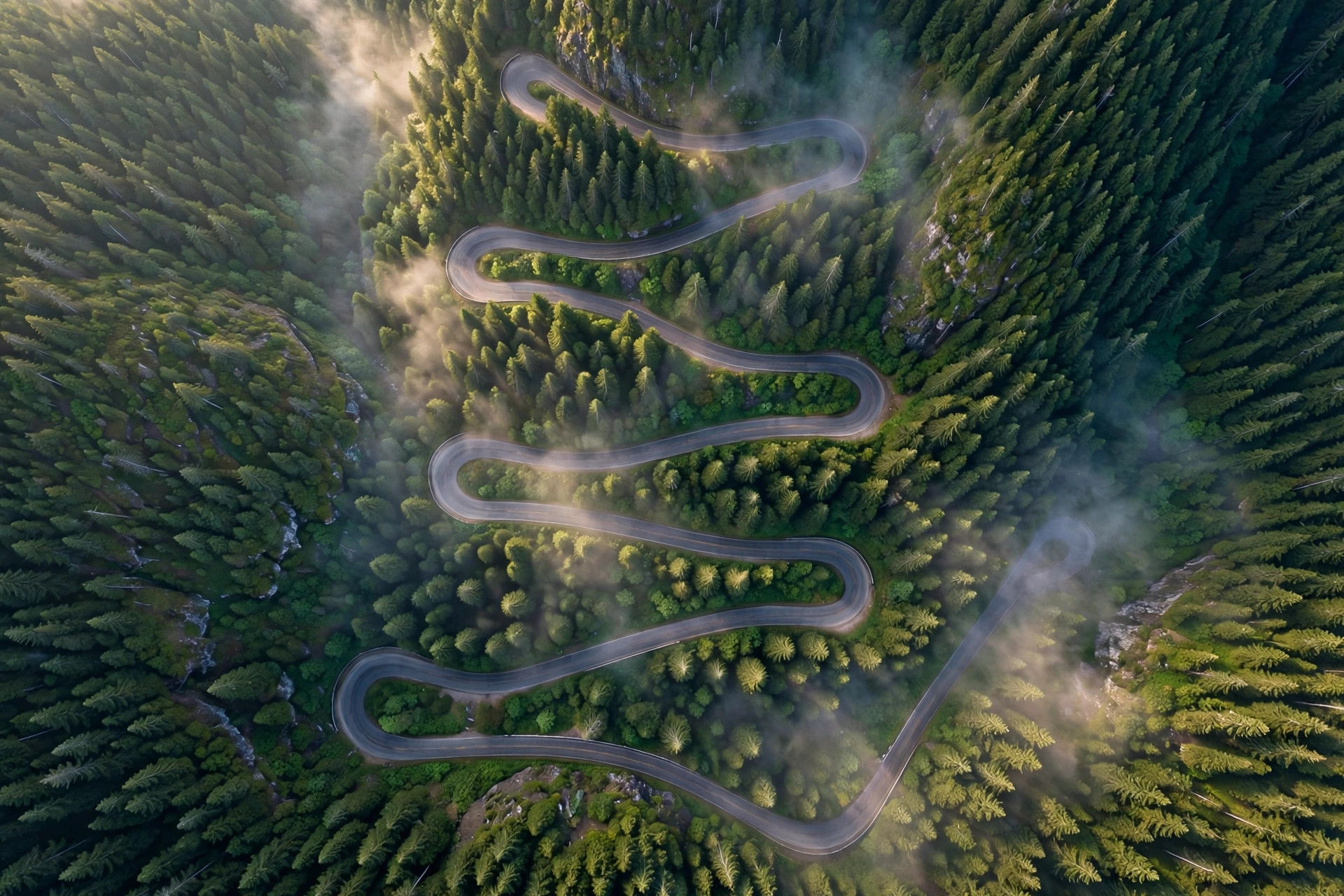
A drone puts a camera where no tripod can go. But altitude alone does not make a good photo. The difference between a snapshot from the sky and a genuinely striking aerial image comes down to light, composition and patience. Here are seven fundamentals that will lift your drone photography quickly.
1. Fly at golden hour
The hour after sunrise and the hour before sunset give you long shadows, warm colour and texture that midday sun flattens out. From altitude, low sun rakes across fields, rooftops and coastlines and reveals shapes you cannot see at noon. Plan your flights around it.
2. Use leading lines
Roads, rivers, coastlines, fences and shadows all make natural leading lines from above. Position the drone so a line enters from a corner of the frame and draws the eye toward your subject. A winding mountain road shot from directly overhead is the classic example — and it works because the line does the composing for you.
3. Shoot top-down, not just at an angle
Most beginners shoot everything at a 45-degree angle. Try pointing the camera straight down. Top-down shots turn familiar scenes — a beach, a car park, a forest — into abstract patterns. It is the one perspective only a drone can give you, so use it.
4. Keep the horizon honest
A tilted horizon is the fastest way to make an aerial photo look amateur. Use your drone app's grid overlay and check the horizon before every shot. Straighten in post if you have to, but get it right in the air and you keep more of the frame.
5. Mind your altitude
Higher is not always better. At 120 metres everything becomes a map; at 20–40 metres you still get drama, scale and detail. Fly low over a subject first, then climb gradually and watch the composition change. Often the best frame is halfway up.
6. Shoot RAW when you can
Drone sensors are small and skies blow out easily. Shooting RAW gives you room to recover highlights and lift shadows without the image falling apart. If your drone only shoots JPEG, underexpose slightly — it is easier to lift a dark image than to rescue a blown sky.
7. Check the rules before you fly
Good photos start with legal flights. Know the altitude limits, no-fly zones and registration requirements where you are flying, and respect people's privacy. The best drone photographers plan their locations as carefully as their shots.
Want to practise without flying? Browse the free drone image gallery and study what makes each shot work — the light, the lines, the altitude — then go and recreate the effect yourself.